+51 986 002 962
info@neotropicperu.com

This 8-day Manu Blanquillo tour crosses two worlds in one journey. You start in the Andes and the cloud forest, travel by boat into the Manu Reserved Zone, and then follow the river down to Blanquillo, where the macaw clay lick, the canopy tower and Cocha Blanco are waiting. You leave by a different route from the one you arrived on, finishing in Colorado and returning to Cusco by road.
Along the way you will watch Andean cock-of-the-rocks display at their lek, soak in the Shintuya hot springs, and spend two nights at Casa Matsiguenka, a lodge managed by the Matsiguenka community, in the heart of the Manu Reserved Zone. You will glide across Cocha Salvador by catamaran in search of giant otters, visit a clay lick, and then continue downriver to Manu Birding Lodge, where the second half of the tour begins.
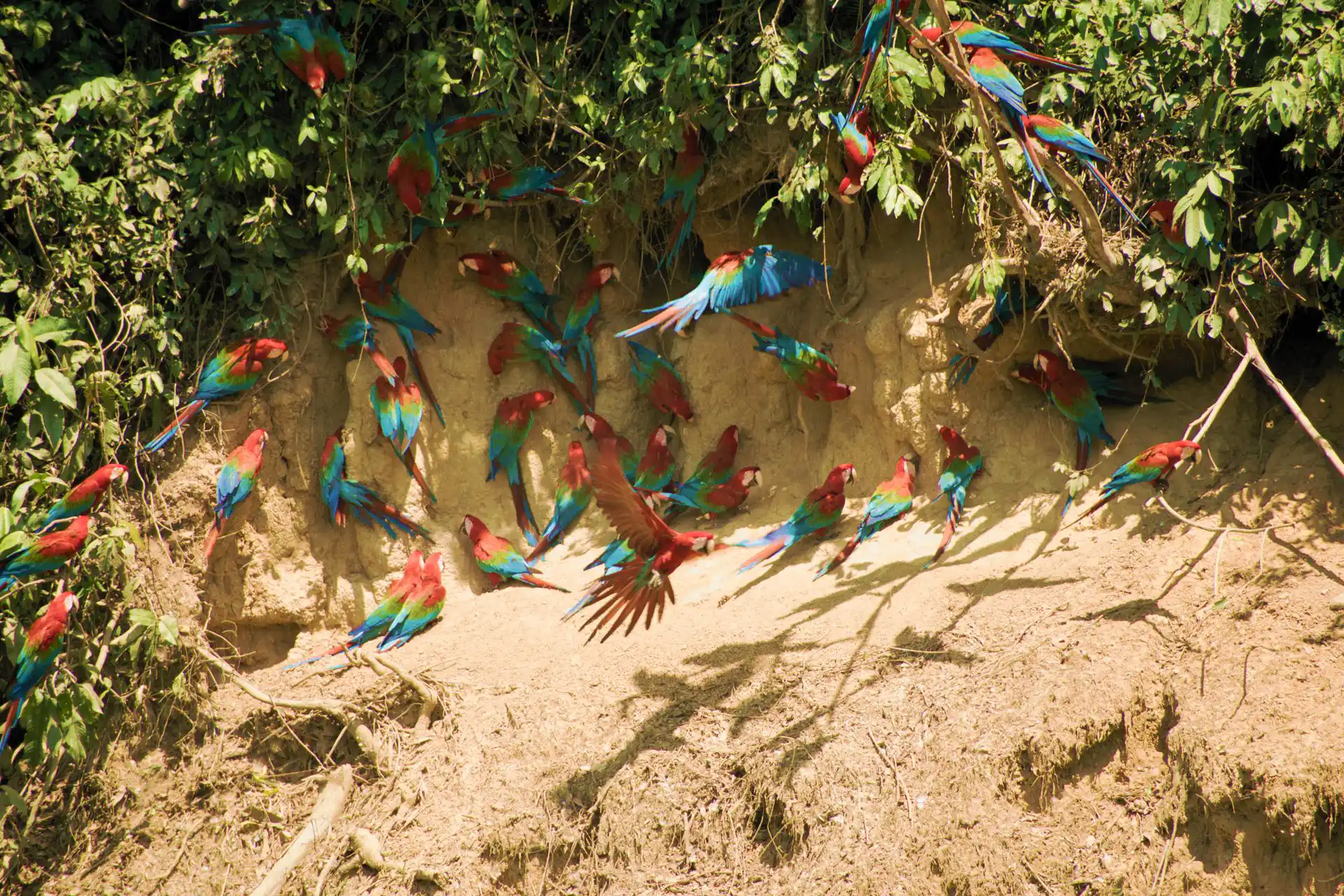
The second half is what makes this Manu Blanquillo tour special. Before sunrise you walk to Collpa Blanquillo, one of the most spectacular macaw and parrot clay licks in the region, and later climb a tower that lifts you above the canopy. You also spend a quiet morning at Cocha Blanco, an oxbow lake that is good for giant otters, hoatzins and caimans, before reaching Colorado and driving back to Cusco.
This tour is ideal for birders, wildlife photographers and repeat Amazon travellers who want to see more than one side of Manu in a single trip. It is physically easy to moderate, but it includes long travel days and a lot of time on boats and roads, so it suits travellers with patience and a taste for adventure. Your guide adapts each day to the weather, the river level and the activity of the wildlife.
Route: Cusco → Bamboo Lodge → Dorado Lodge → Casa Matsiguenka → Manu Birding Lodge → Colorado → Cusco
A day that crosses the Andes and ends among orchids and cock-of-the-rocks.
We pick you up from your Cusco hotel early mornig and leave the city while it is still waking up. The road climbs steadily through highland villages and open grassland. After about an hour and a half we stop at Ninamarca to see the chullpas, stone burial towers built long before the Incas, standing alone on the plateau.
Optional breakfast in Paucartambo, a colonial mountain town famous for its traditional festivals. From here the road keeps rising to Acjanaco Pass, above 3,500 m, where the cold air and the wide view over the Manu Biosphere Reserve make a dramatic first look at where we are heading. Your guide will explain the local belief in the apus, the mountain spirits.
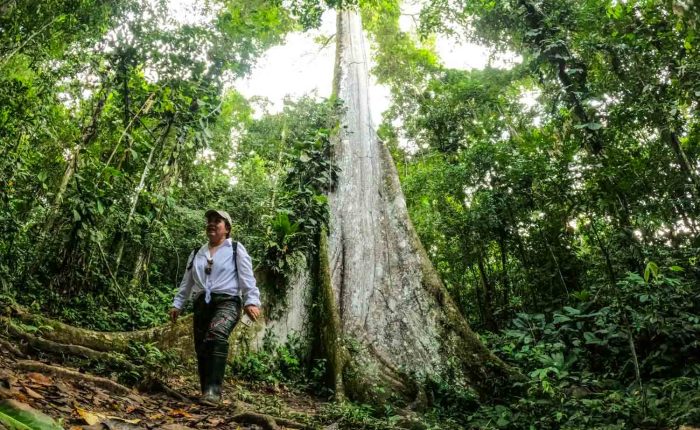
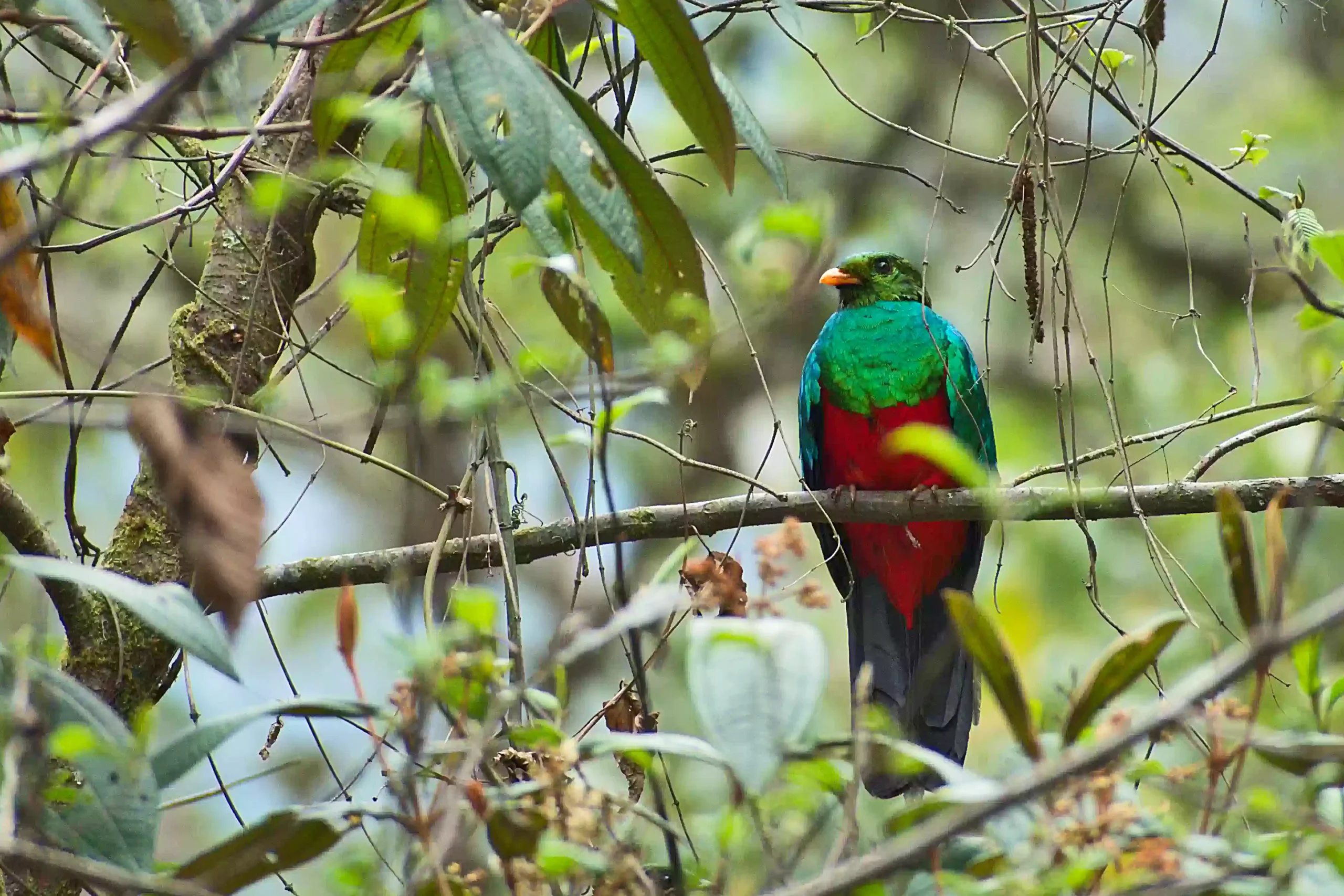
Then we go down, and fast. In a few hours, bare highlands become dripping cloud forest, thick with moss, ferns, bromeliads and orchids. We stop often and without rush for birds such as tanagers, hummingbirds, toucans and trogons. Lunch is a along the way.
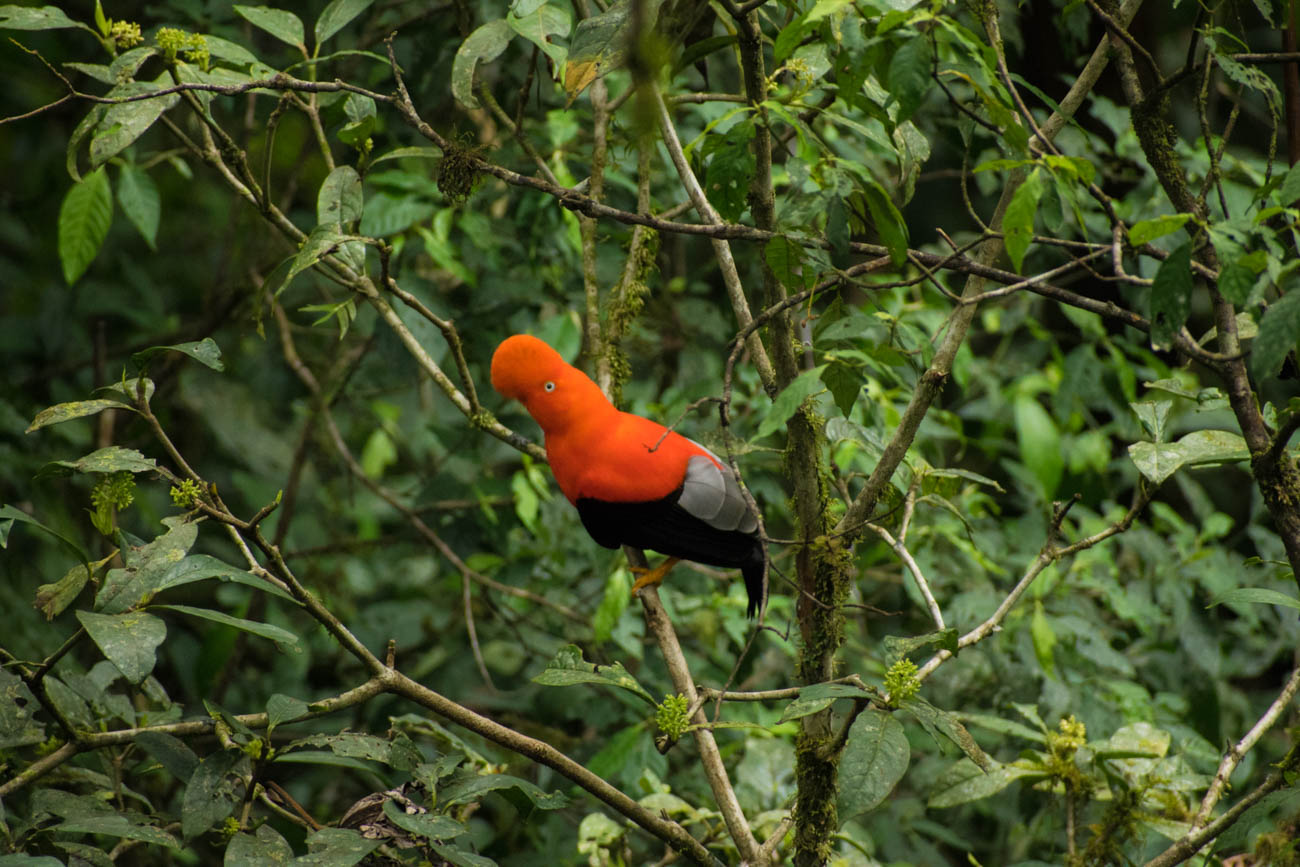
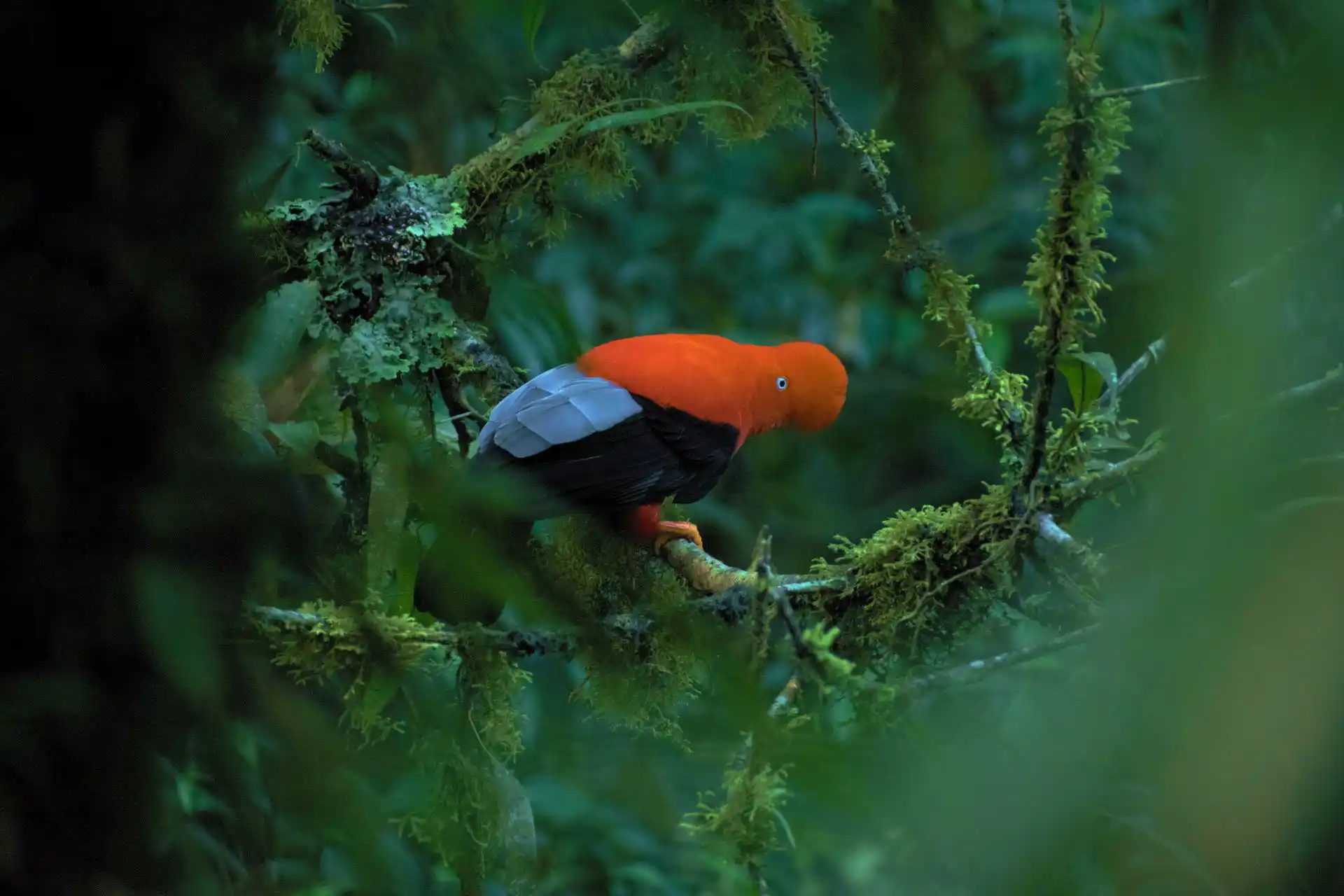
The afternoon belongs to the Andean cock-of-the-rock. The males gather at a display ground and compete for females with loud calls and sudden movements. It is theatrical, noisy and hard to forget. We arrive at the lodge around 5:00 p.m. for a hot shower, dinner and a briefing.
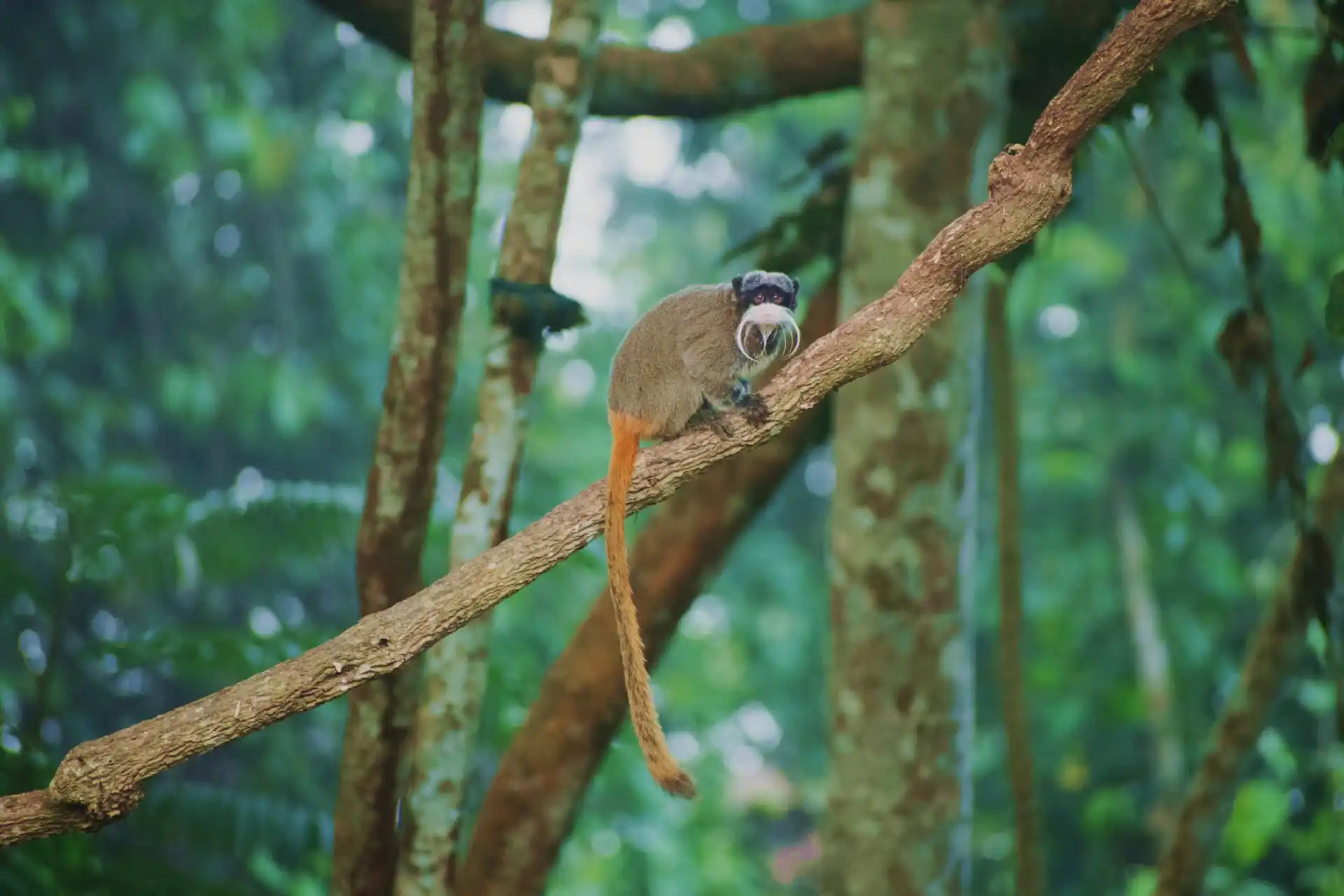
What you may see: Andean cock-of-the-rock, woolly monkeys, tanagers, hummingbirds, toucans, orchids, giant ferns.
At a glance: easy to moderate · 9 to 10 hours of travel with stops · overnight at Bamboo lodge, approx. 700 m.
Guide’s tip: keep a light jacket handy. It is cold at the pass and warm and humid just a few hours later.
The road ends and the river takes over.
After breakfast we continue to the river port Atalaya, put on life jackets and rubber boots, and board our boat for the first journey of the tour.
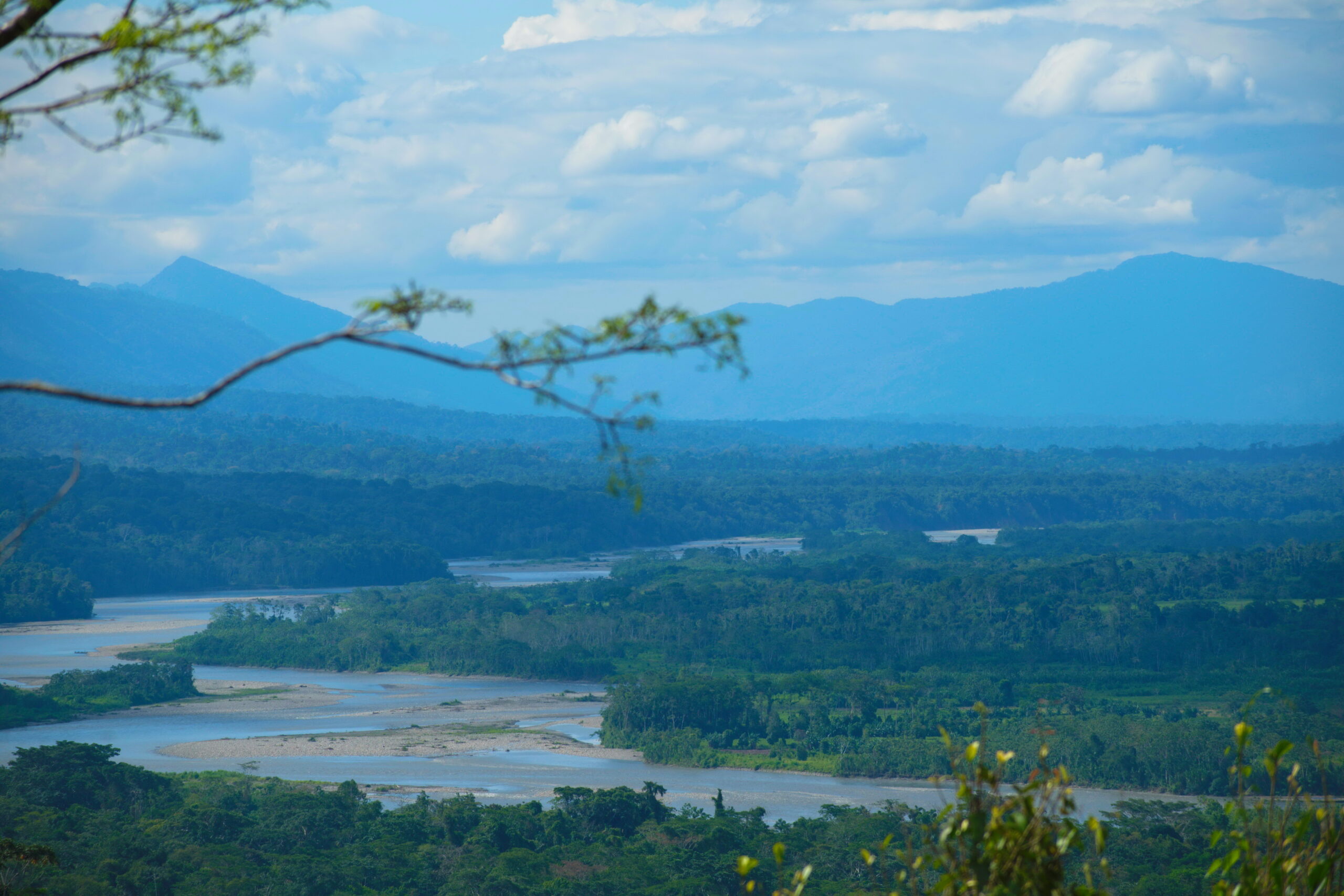
We follow the Alto Madre de Dios River, watching for kingfishers, macaws in pairs, capuchin monkeys and caimans resting on the banks. At midday we stop at the Shintuya hot springs, a relaxing place to swim and have lunch in the middle of the jungle.
In the afternoon we continue to Dorado Lodge, set in the lowland forest. After dinner, you can join the first night walk, when frogs, insects and nocturnal birds come alive.
What you may see: macaws, kingfishers, capuchin monkeys, toucans, caimans, frogs.
At a glance: easy · 4 to 5 hours by boat · overnight at Dorado Lodge.
Guide’s tip: wear a swimsuit under your clothes and keep sandals in your day bag for the hot springs.
The forest gets wilder with every bend of the river.
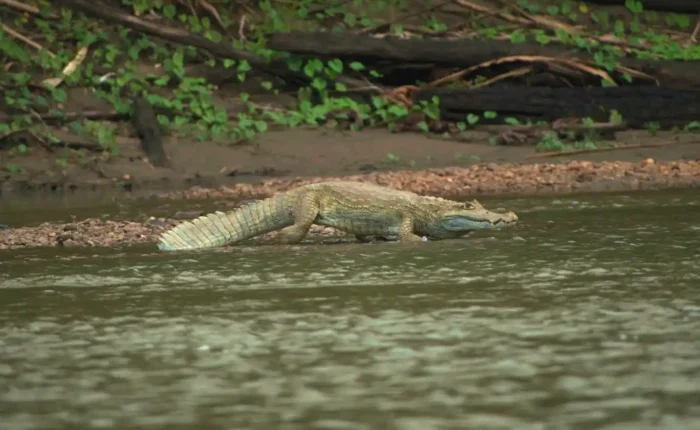
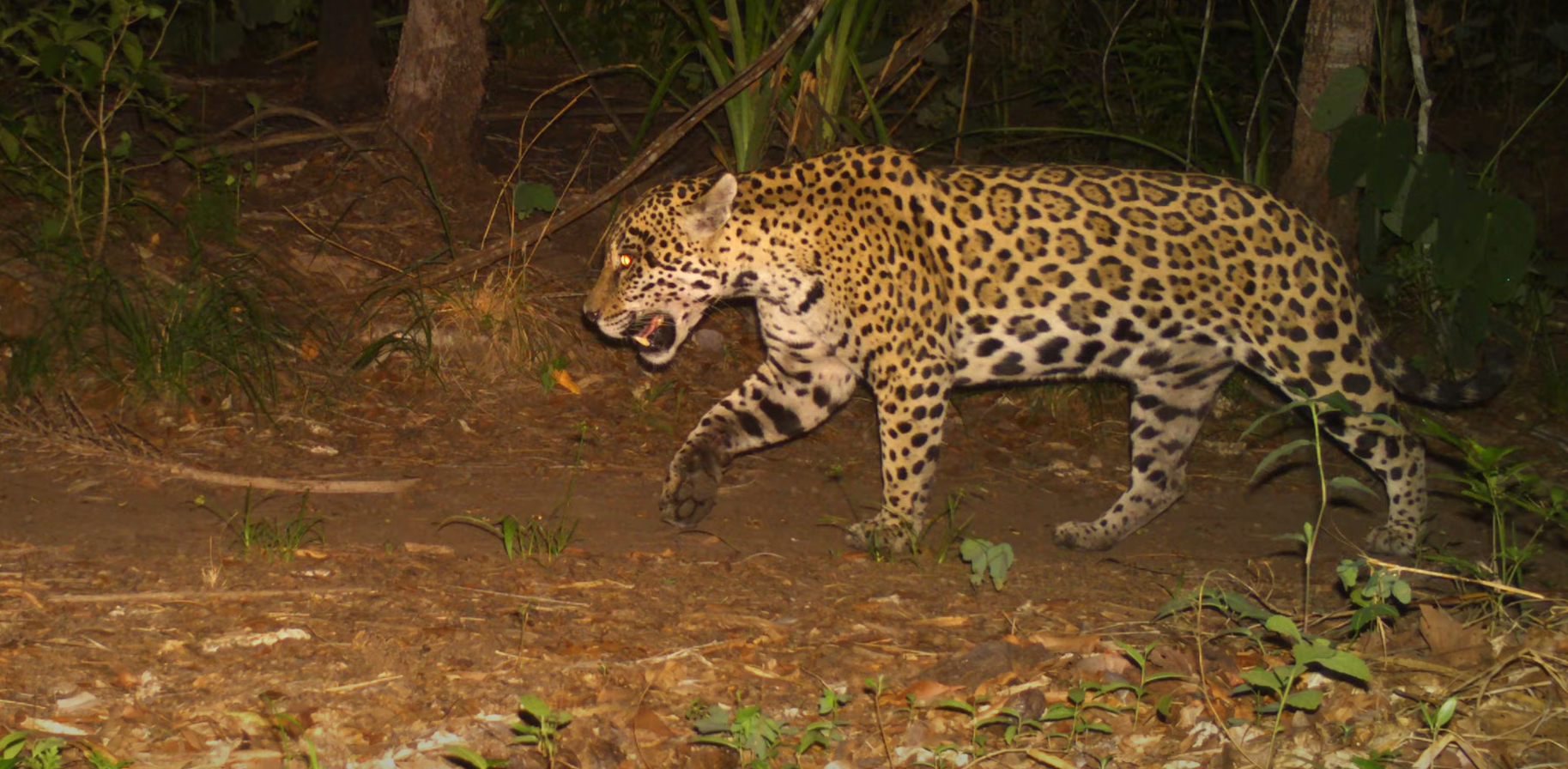
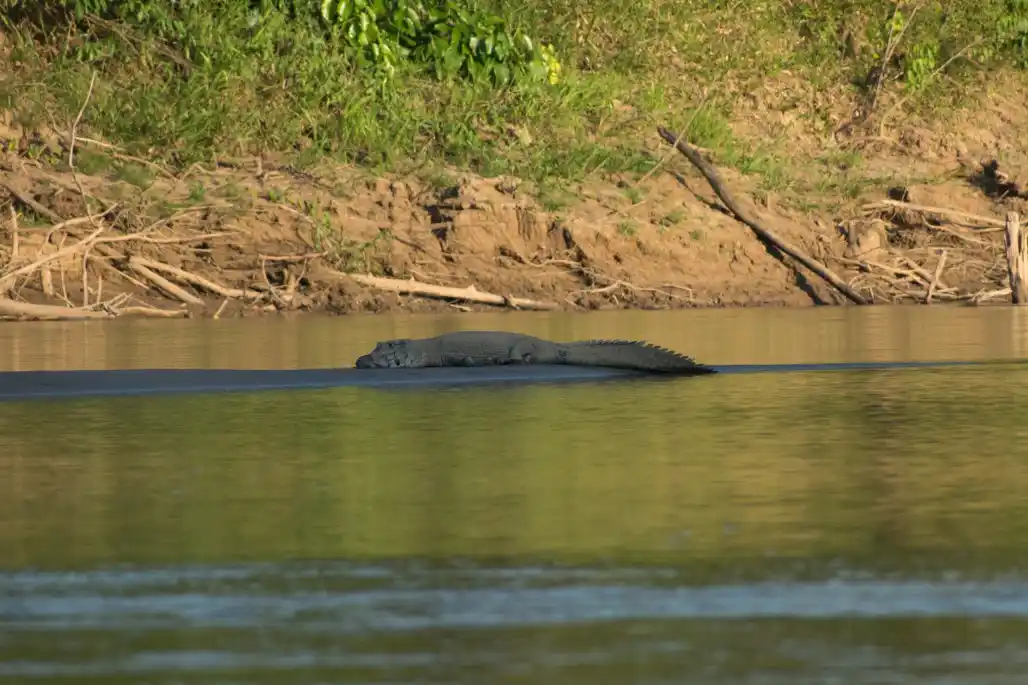
We leave early, while the animals are active. At the Limonal checkpoint we complete the formalities to enter the Manu Reserved Zone, and from this point the river widens and the forest feels quieter. Keep your eyes on the banks: turtles on fallen logs, white and black caimans, capybaras, a great variety of birds and, with luck, a jaguar resting in the shade.
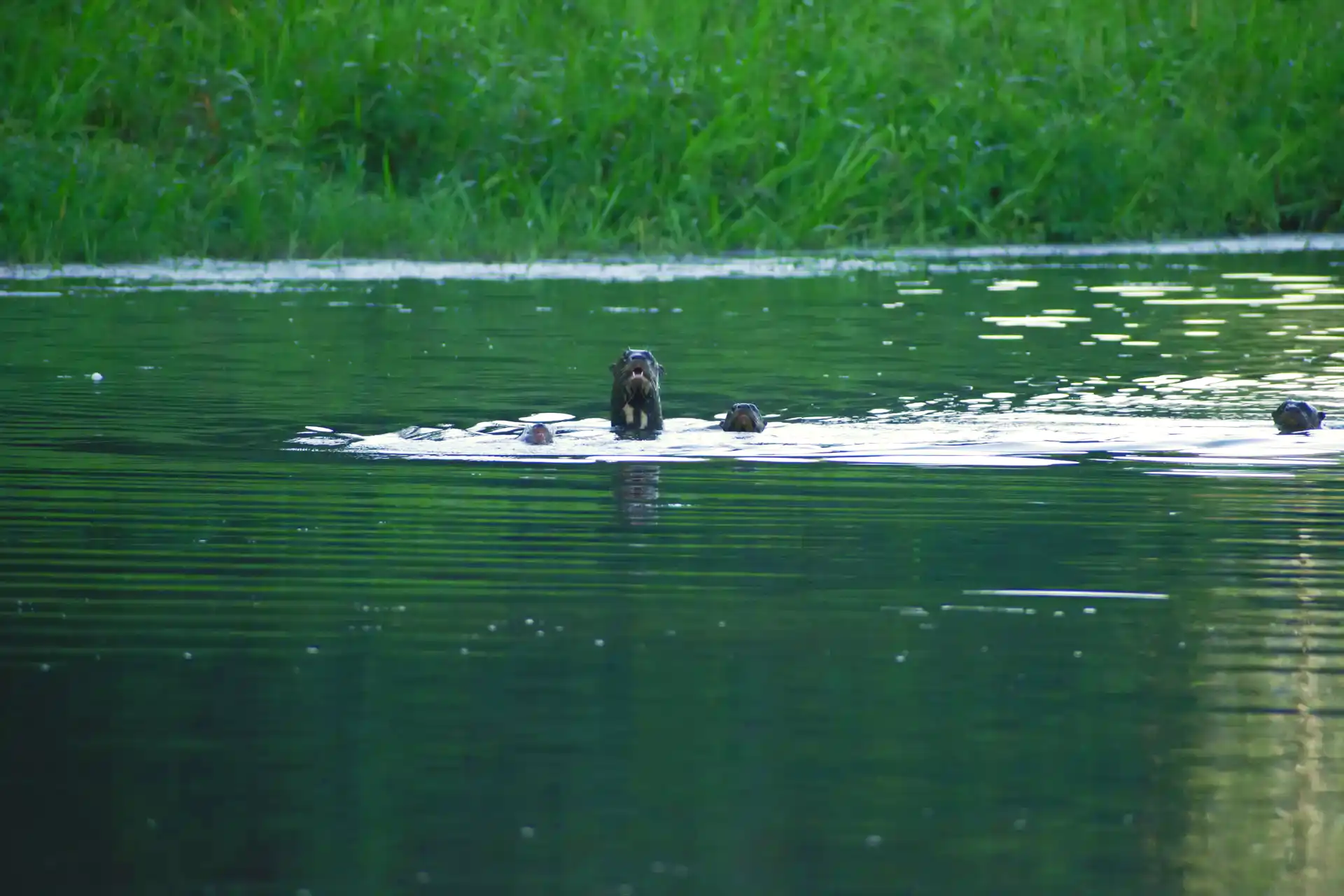
In the afternoon we visit Cocha Otorongo, a crescent-shaped oxbow lake. A 20-metre observation tower lets you look over the water and the canopy, and it is one of the best places in Manu to watch giant otters. These endangered animals live in family groups and eat several kilos of fish daily, so they are noisy, energetic and fascinating to watch. A zoom lens is very useful here.
In the late afternoon we arrive at Casa Matsiguenka, our home for the next three nights. The lodge is built with local materials, managed by Matsiguenka communities and powered by solar panels. After settling in, you can join an optional short night walk. We share dinner and fall asleep to the sound of the forest.
What you may see: giant otters, black and white caimans, turtles, macaws, howler monkeys, capybaras, possibly jaguar.
At a glance: moderate · 5 to 6 hours by boat · overnight at Casa Matsiguenka or Jaguar Lodge, approx. 350 m.
Guide’s tip: bring a hat and sunscreen for the boat. The light reflected off the water is stronger than it looks.
A full day inside the Reserved Zone, without rushing.
After breakfast we go to Cocha Salvador, one of the most iconic lakes in Manu. We board a catamaran and glide across calm water, which is the best way to approach giant otter families, howler monkeys, herons and caimans without disturbing them.
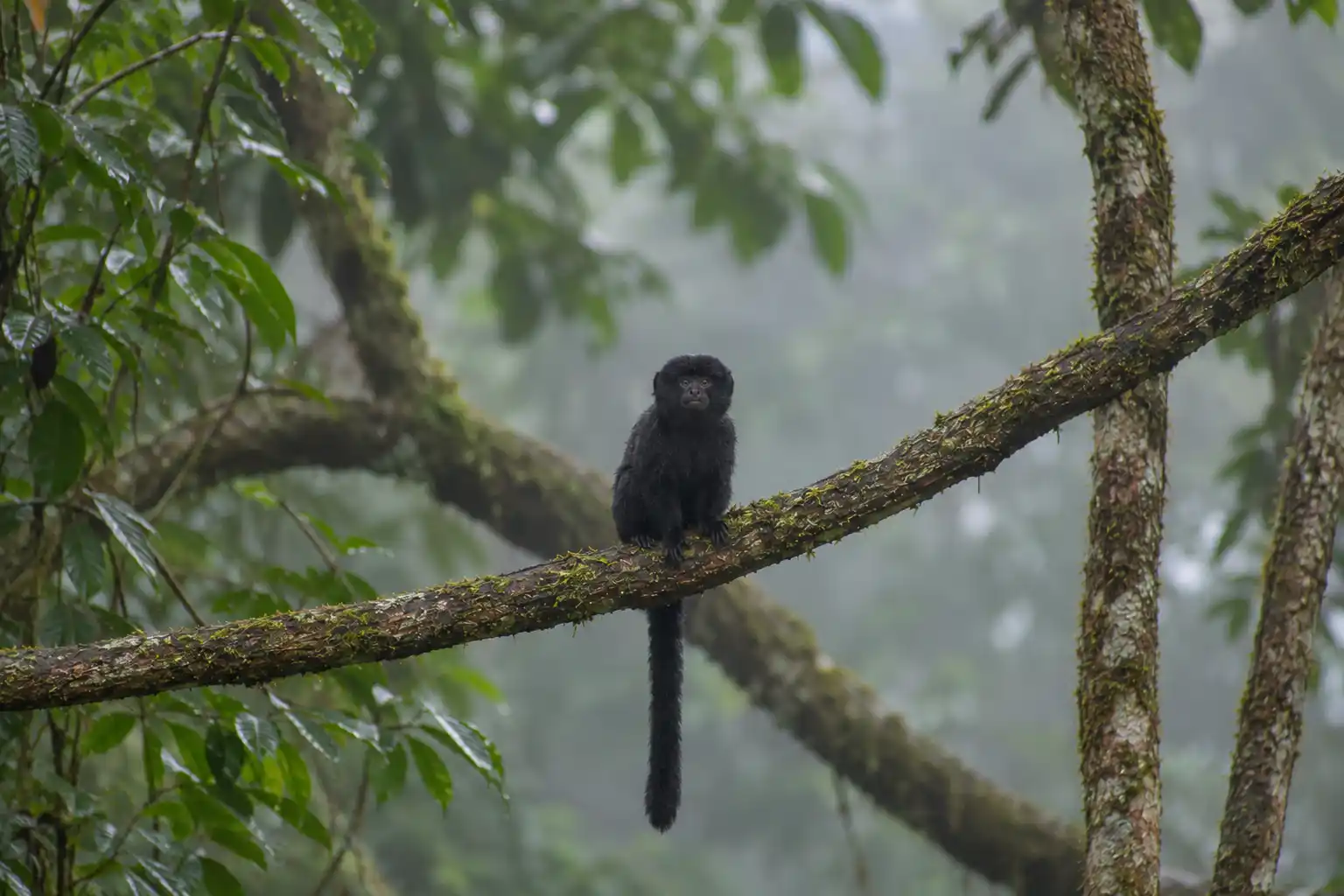
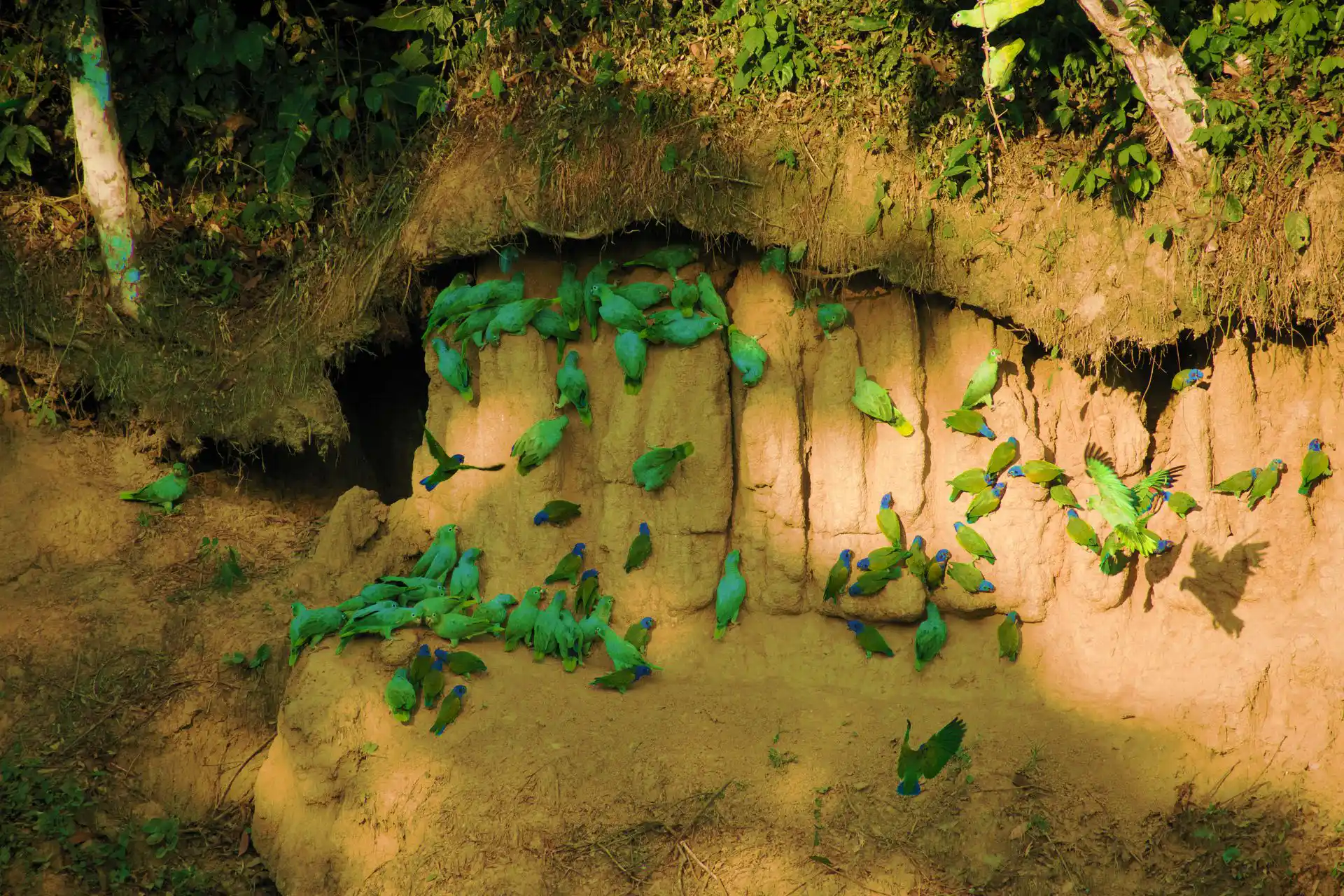
We then visit the clay lick, where macaws and parrots gather to feed on mineral-rich clay. Even if you are not a birder, the sound, color and movement are hard to forget. After lunch at the lodge and a rest in the heat of the day, we take a guided walk through the forest to look for monkeys, sloths and birds, and to learn how local people use the forest’s plants.
Dinner and a night walk close the day.
What you may see: giant otters, howler monkeys, sloths, herons, macaws, parrots, tree frogs.
At a glance: moderate · short boat rides and walks of 2 to 3 hours · overnight at Casa Matsiguenka.
Guide’s tip: keep your camera ready, but also spend a few minutes just listening. The sounds of Manu are half the experience.
A full day on the river, with the forest changing along the way.
We say goodbye to Casa Matsiguenka and leave early, with breakfast on board. The morning calm is the best time to look for jaguars, tapirs, capybaras and birds along the banks. The river carries us downstream, out of the Reserved Zone and toward the lowlands of Madre de Dios, with stops for photographs and wildlife whenever the guide asks the boat driver to slow down.
We reach Manu Birding Lodge in the afternoon 5 pm. aprox. After settling in, you can take a short walk near the lodge to look for birds in the late light. Dinner is followed by a briefing for tomorrow’s early start at the clay lick.
What you may see: jaguar (possible), black caiman, capybaras, toucans, macaws, turtles.
At a glance: easy · 5-6 hours by boat · overnight at Manu Birding Lodge.
Guide’s tip: keep a small dry bag for your camera and phone. The river can splash and the weather changes quickly.
The highlight of this Manu Blanquillo tour.
We wake up in the dark and walk to Collpa Blanquillo before sunrise. At first light, macaws and parrots begin to arrive and gather on the clay bank, filling the forest with noise and color. We watch quietly from the hide for as long as the birds are active.
After breakfast, we climb the canopy tower, which lifts you above the trees for a different view of the forest. This is one of the best places in the area for birds that stay high in the canopy, such as toucans, tanagers, parrots and, with luck, raptors and monkeys. In the afternoon we walk the forest trails at a relaxed pace, with time to stop for insects, fungi, tracks and trees. After dinner there is an optional night walk.
What you may see: blue-and-yellow and red-and-green macaws, parrots, toucans, tanagers, monkeys, forest insects.
At a glance: moderate · up to 5 hours of walking in total · overnight at Manu Birding Lodge.
Guide’s tip: the clay lick is quiet. Dress in neutral colors, avoid strong scents and bring a seat cushion if you plan to wait.
A calm morning on the lake, then the river to the road.
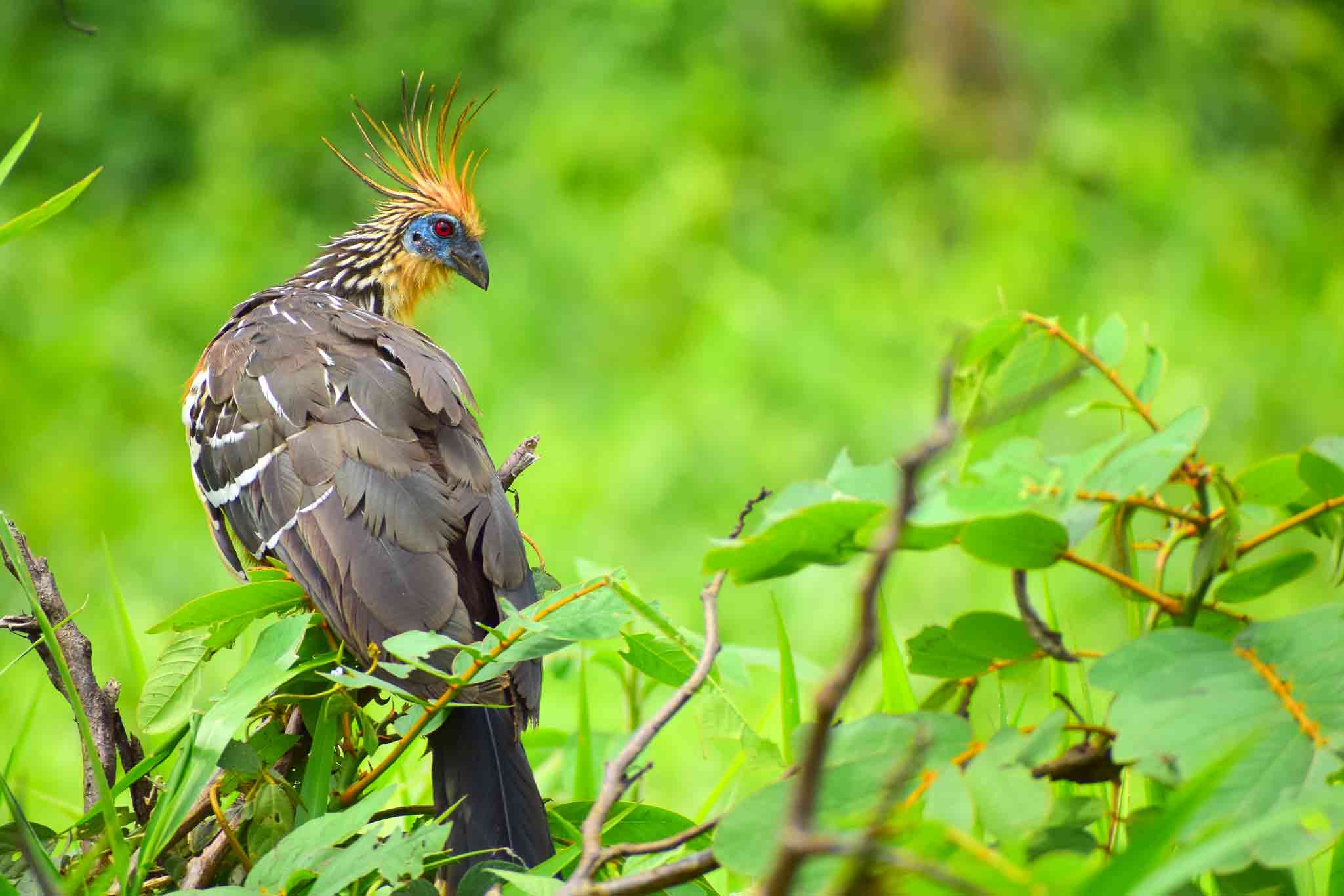
We start early at Cocha Blanco, a quiet oxbow lake surrounded by forest using a catamaran. Mornings here are good for giant river otters, hoatzins, herons, kingfishers and caimans, and the stillness of the water makes it ideal for photography and relaxed birding.
After lunch, take time to rest before exploring the trails around the lodge.
What you may see: giant otters, hoatzin, herons, kingfishers, caimans, turtles.
At a glance: easy · morning at the lake and 2 hours by boat · overnight at Manu Birding Lodge.
Guide’s tip: bring a hat and binoculars. The best light on Cocha Blanco is early in the morning.
The overland return.
After an early breakfast we leave the lodge, navigating down the river to Colorado to catch a private vehicle and begin the journey back to Cusco. The road crosses lowland forest, rivers, cloud forest and high Andean passes, with stops for lunch and viewpoints. We aim to arrive in Cusco in the evening approx. 8-9 hours, and drop you at your hotel.
This is a long travel day. We recommend booking your onward flight for the following day, and checking road conditions with your guide, because weather can cause delays on this route.
At a glance: easy · 9 hours by road with stops · tour ends in Cusco, approx. 3,400 m.