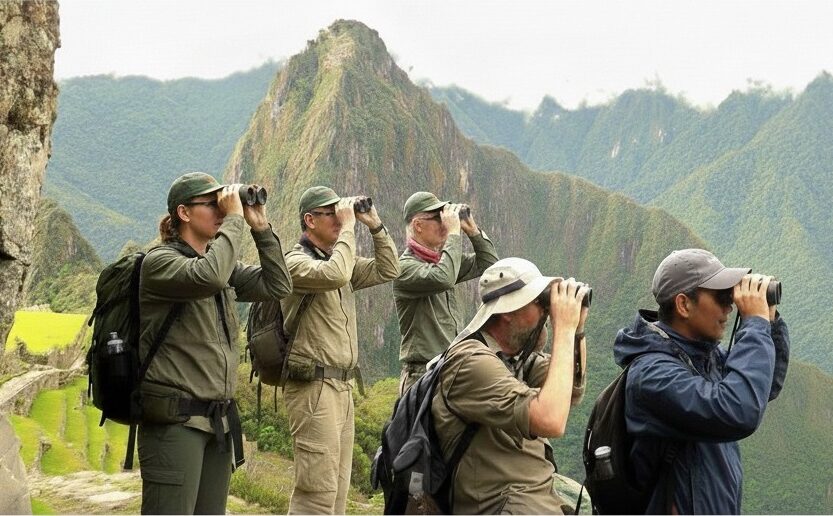
The birds of Machu Picchu represent some of the most extraordinary avian diversity in South America. Nestled in the cloud forests of the Peruvian Andes, this UNESCO World Heritage Site hosts an astonishing 443 bird species, including 20 endemic species found nowhere else on Earth.
Whether you’re an experienced birder or a curious traveler, the birds of Machu Picchu offer unforgettable encounters. From the vibrant Andean Cock-of-the-Rock to elusive fruiteaters, these species thrive in diverse habitats ranging from subtropical forests to high-altitude grasslands.
In this comprehensive guide, we’ll explore 10 must-see birds of Machu Picchu, their unique behaviors, and expert tips for spotting them during your visit.
Why Machu Picchu Is a Birdwatcher’s Paradise
The Machu Picchu Sanctuary’s exceptional biodiversity stems from its varied ecosystems. Cloud forests, montane streams, and Andean grasslands create perfect conditions for both resident and migratory species. Many birds of Machu Picchu are endemic to the Andes, making this destination essential for serious birdwatchers.
The region’s conservation status has protected these habitats, allowing rare species to flourish. Birdwatching here isn’t just about ticking species off a list—it’s about witnessing evolution in action among the ancient Incan ruins.
10 Spectacular Birds of Machu Picchu You Must See
1. Andean Cock-of-the-Rock (Rupicola peruvianus)
Peru’s National Bird and the Star of Birds of Machu Picchu
The Andean Cock-of-the-Rock is arguably the most iconic among all birds of Machu Picchu. Males display brilliant orange plumage with a distinctive disk-shaped crest that covers their bill. During breeding season, males gather at traditional leks to perform elaborate courtship displays, bouncing and calling to attract females.
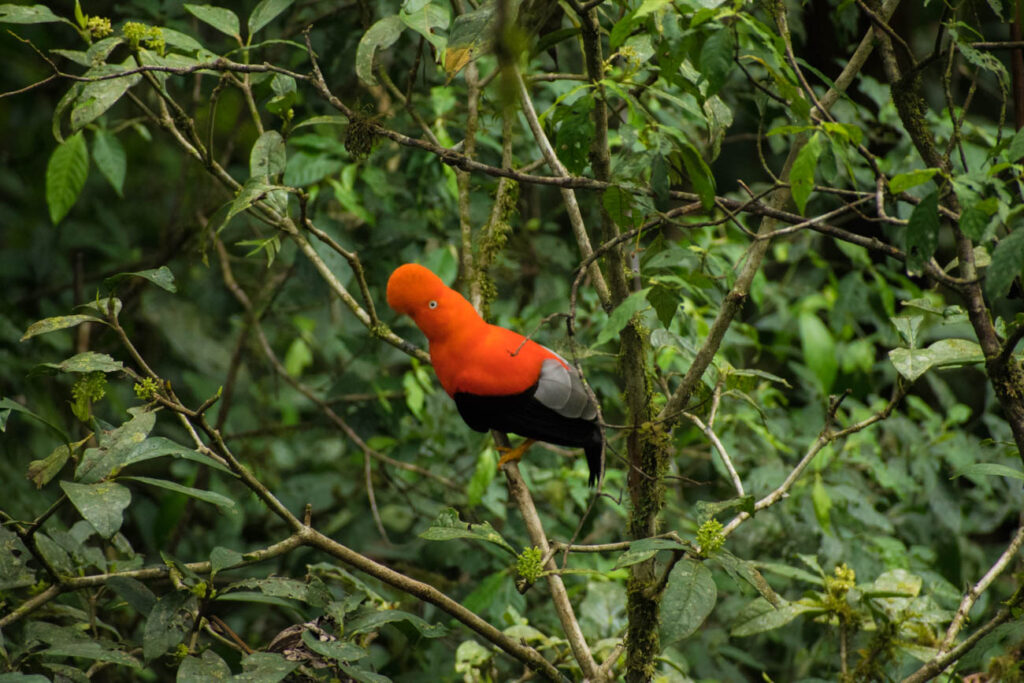
Where to spot them: Early morning along the Mandor Valley trail, particularly near rocky outcrops in cloud forest areas.
Best viewing time: Dawn (5:30-7:30 AM) during dry season (May-September)
2. Torrent Duck (Merganetta armata)
Master of Fast-Flowing Mountain Streams
Among the birds of Machu Picchu, the Torrent Duck stands out for its remarkable adaptation to turbulent waters. These sleek ducks navigate rapids with expert precision, diving and swimming against powerful currents that would overwhelm most waterfowl.
Males feature striking patterns with white eyes, black crests, and bright yellow bills. Females display russet-colored breasts. They feed on aquatic insects and larvae clinging to rocks in fast-moving streams.
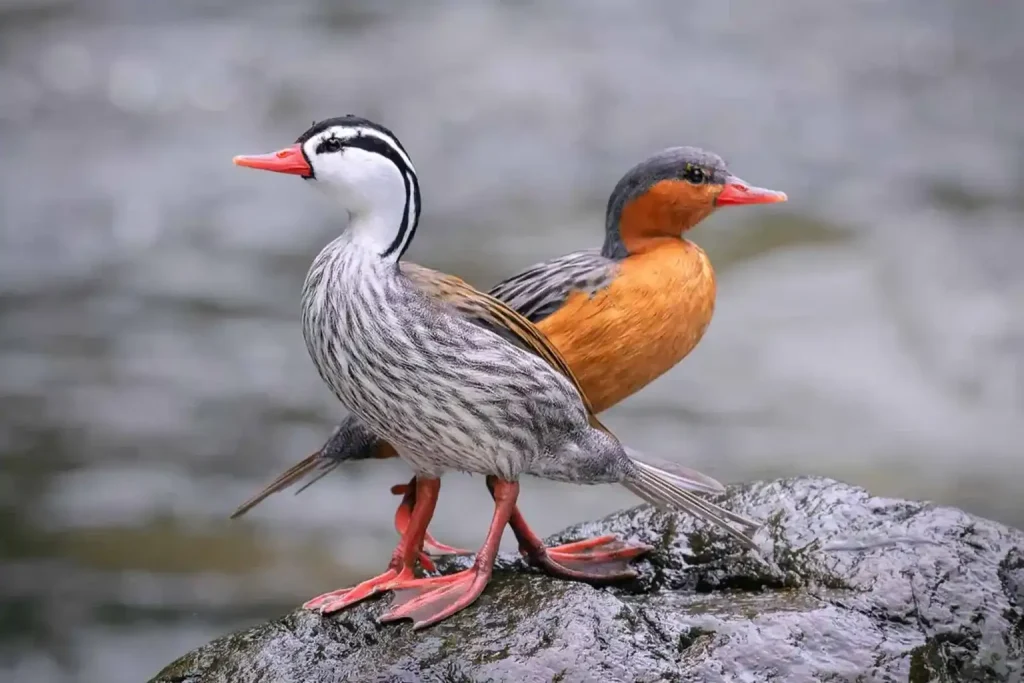
Where to spot them: Urubamba River and tributaries near Aguas Calientes, especially on exposed rocks in rapids.
3. Blue-naped Chlorophonia (Chlorophonia cyanea)
Jewel of the Cloud Forest Canopy
This small tanager ranks among the most colorful birds of Machu Picchu. Males showcase electric blue crowns contrasting with lime-green backs and golden-yellow breasts. These fruit-eating birds often travel in small flocks through the forest canopy.
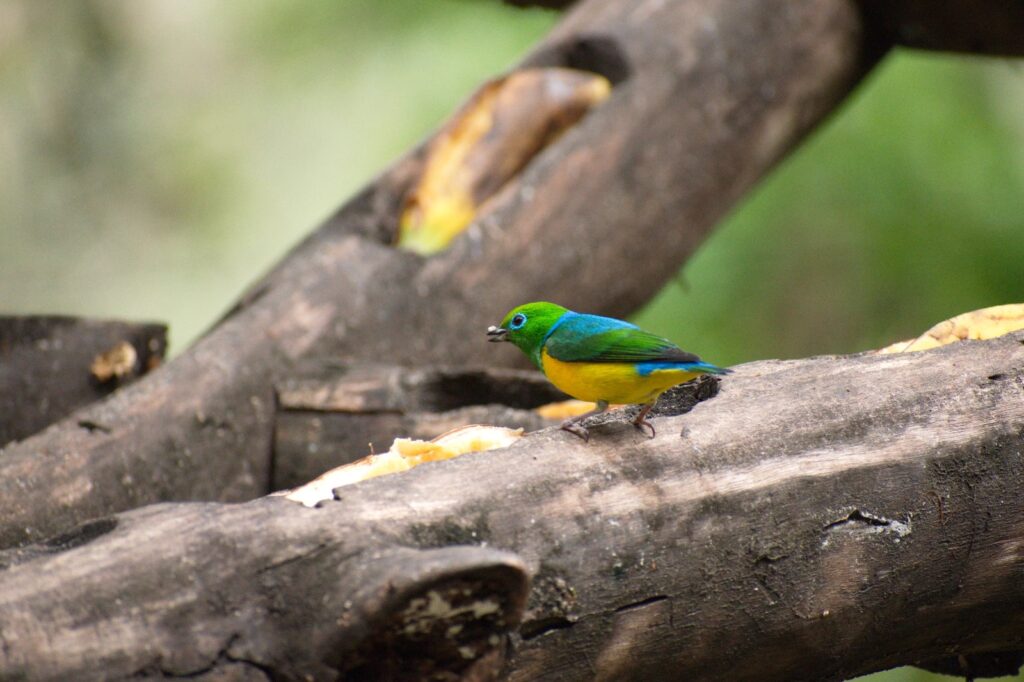
Despite their brilliant colors, chlorophonias can be challenging to spot as they forage high in fruiting trees. Listen for their high-pitched calls and watch fruiting trees like Cecropia and wild avocado.
4. Andean Motmot (Momotus aequatorialis)
The Bird with Racket-Tipped Tail Feathers
The Andean Motmot is one of the most distinctive birds of Machu Picchu thanks to its unique tail. Adults develop elongated tail feathers with bare shafts and spatulate tips, creating a “racket” appearance that swings like a pendulum when perched.
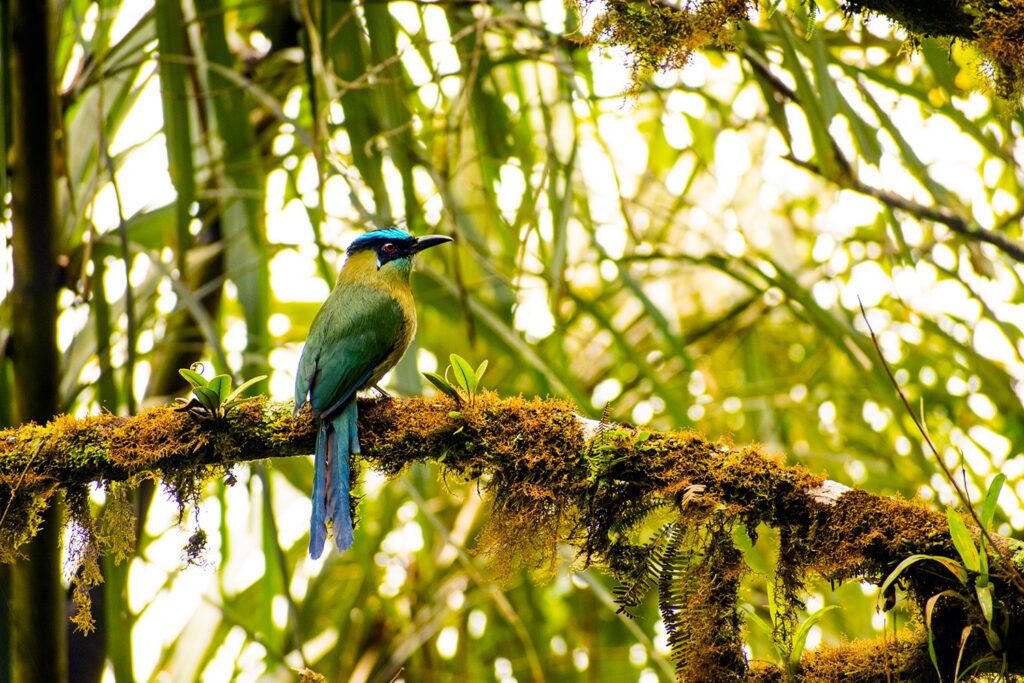
These sit-and-wait predators hunt insects, small lizards, and even snakes from exposed perches. Their turquoise-green plumage blends remarkably well with dappled forest light.
5. Green Jay (Cyanocorax yncas) – Also Known as Inca Jay
Intelligent Corvids of the Subtropical Forest
The Green Jay, locally called Inca Jay, represents one of the more commonly observed birds of Machu Picchu, particularly around the Mandor Gardens. These intelligent birds display stunning blue-and-black plumage with distinctive white collars.
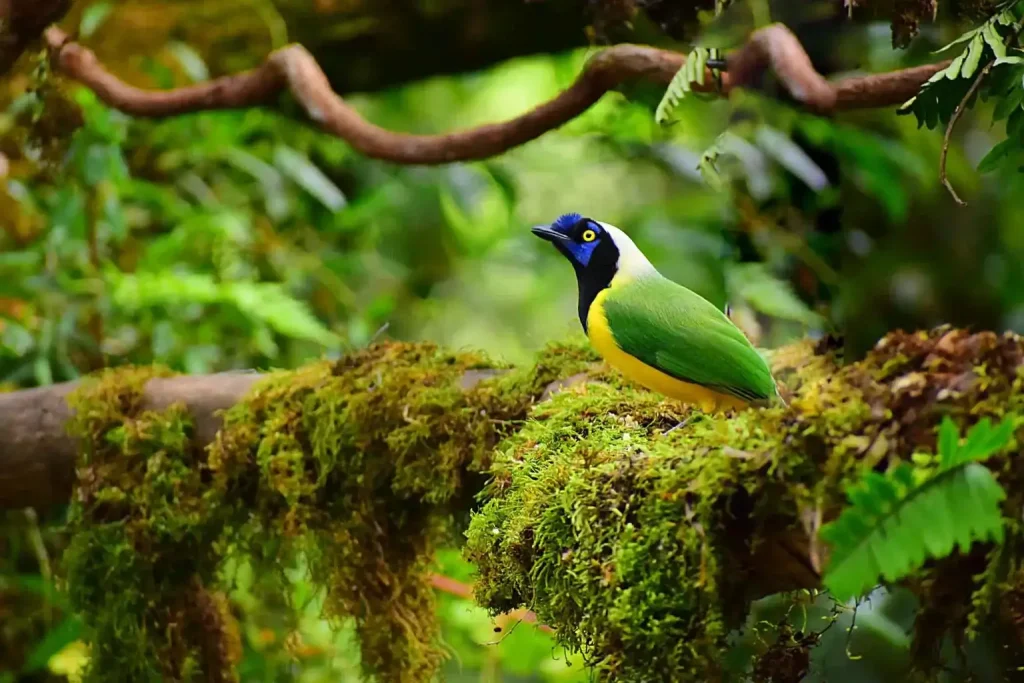
Green Jays are known for their problem-solving abilities and food-caching behavior, storing insects and seeds for later consumption. They’re often vocal and curious, sometimes approaching visitors at popular viewpoints.
Where to spot them: Mandor waterfall area, gardens near Aguas Calientes, and along the Inca Trail.
6. Masked Fruiteater (Pipreola pulchra)
An Elusive Endemic Among Birds of Machu Picchu
This subtropical cotinga is highly sought after by birdwatchers. The Masked Fruiteater features distinctive yellow facial markings against dark greenish plumage, creating its namesake “masked” appearance.
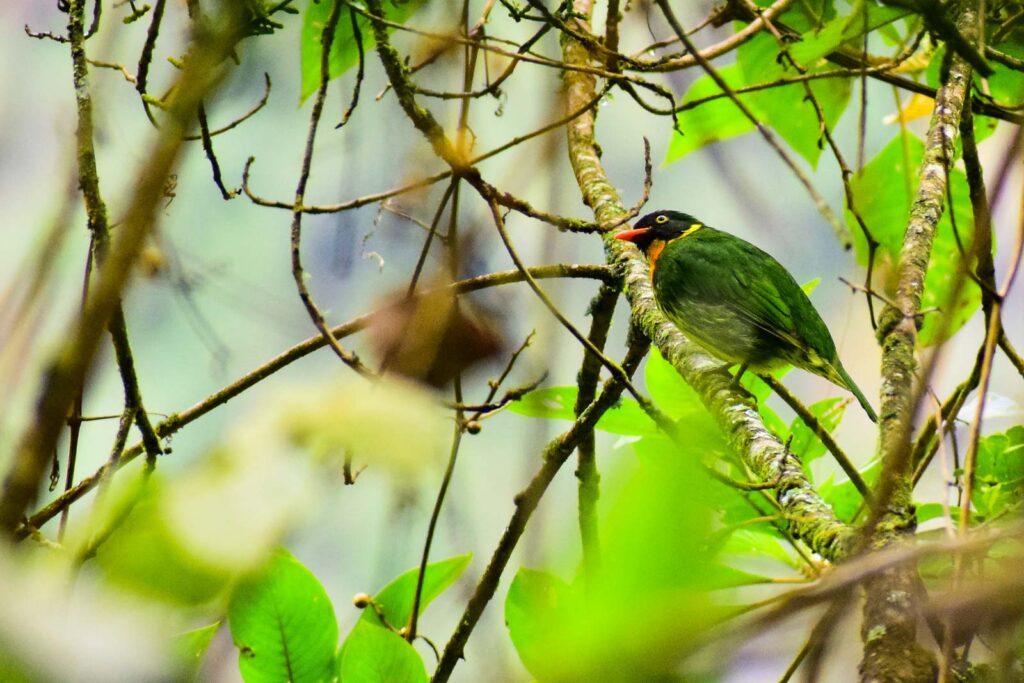
These shy birds inhabit dense, humid forests at mid-elevations, making them one of the more challenging birds of Machu Picchu to observe. Fruiting trees, especially in the Mandor Valley, offer the best chances for sightings.
Tip: Hire a local birding guide who knows recent fruiting trees and vocal patterns.
7. Versicolored Barbet (Eubucco versicolor)
A Kaleidoscope of Colors
Few birds of Machu Picchu display such stunning plumage variety as the Versicolored Barbet. Males feature blue facial patches, red crowns, green backs, and golden throats—a true rainbow of colors. Their long, striped tail feathers can extend twice their body length when displayed.
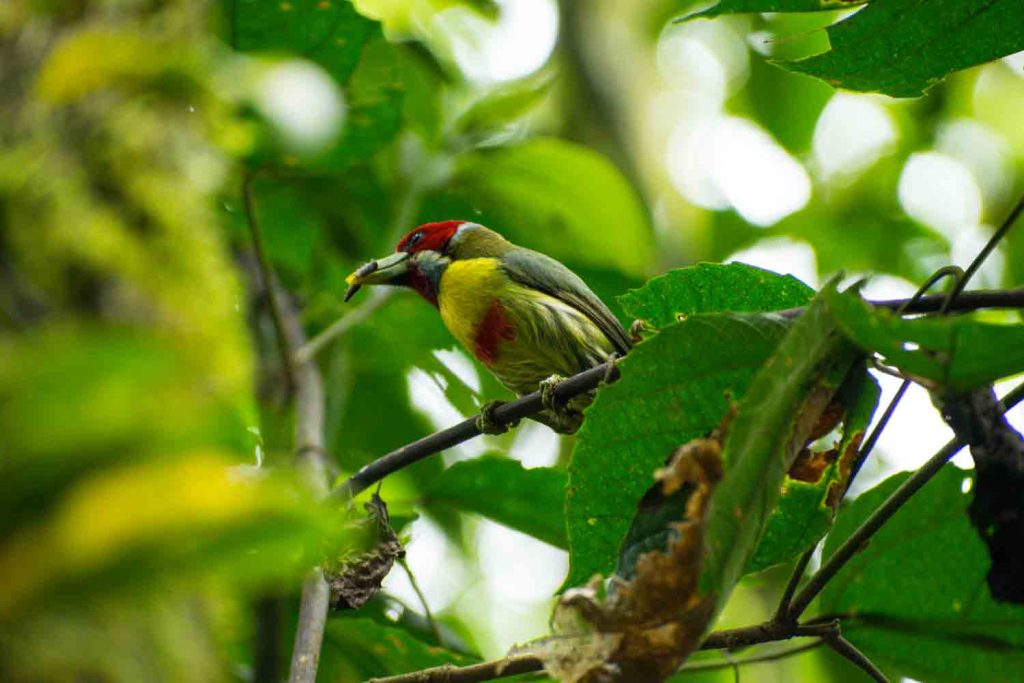
These barbets feed primarily on fruits and insects, often joining mixed-species foraging flocks in the canopy. Their repetitive, nasal calls help locate them in dense vegetation.
Size: 11-14 cm, making them relatively easy to observe when found.
8. Dusky-green Oropendola (Psarocolius atrovirens)
Architects of Hanging Nests
The Dusky-green Oropendola creates some of the most impressive nest structures among all birds of Machu Picchu. These colonial nesters weave elaborate hanging nests that can exceed three feet in length, with colonies containing 15 or more nests suspended from a single tree.
Males display glossy black plumage with brilliant yellow eyes, while females show olive-brown coloring. Their gurgling, liquid calls are distinctive sounds of the forest. As important seed dispersers, oropendolas play crucial ecological roles in forest regeneration.
Where to spot them: Look for nest colonies in tall trees near forest edges and clearings.
9. Golden-headed Quetzal (Pharomachrus auriceps)
The Emerald Jewel of Cloud Forests
The Golden-headed Quetzal is among the most breathtaking birds of Machu Picchu and a prized sighting for any birdwatcher. Males display iridescent emerald-green plumage that shimmers in dappled sunlight, contrasted by a brilliant golden-yellow head and chest. Their long, flowing tail feathers create an elegant silhouette as they perch in the canopy.
Unlike their more famous cousin, the Resplendent Quetzal, the Golden-headed Quetzal inhabits cloud forests at elevations between 1,200-3,000 meters—making the Machu Picchu region ideal habitat. These frugivores primarily feed on wild avocados, laurels, and other native fruits, playing a vital role as seed dispersers.
Quetzals are often solitary or found in pairs, remaining relatively quiet except during breeding season when males produce distinctive, rolling calls. Their undulating flight pattern—rising and falling between perches—is characteristic and helps with identification even at a distance.
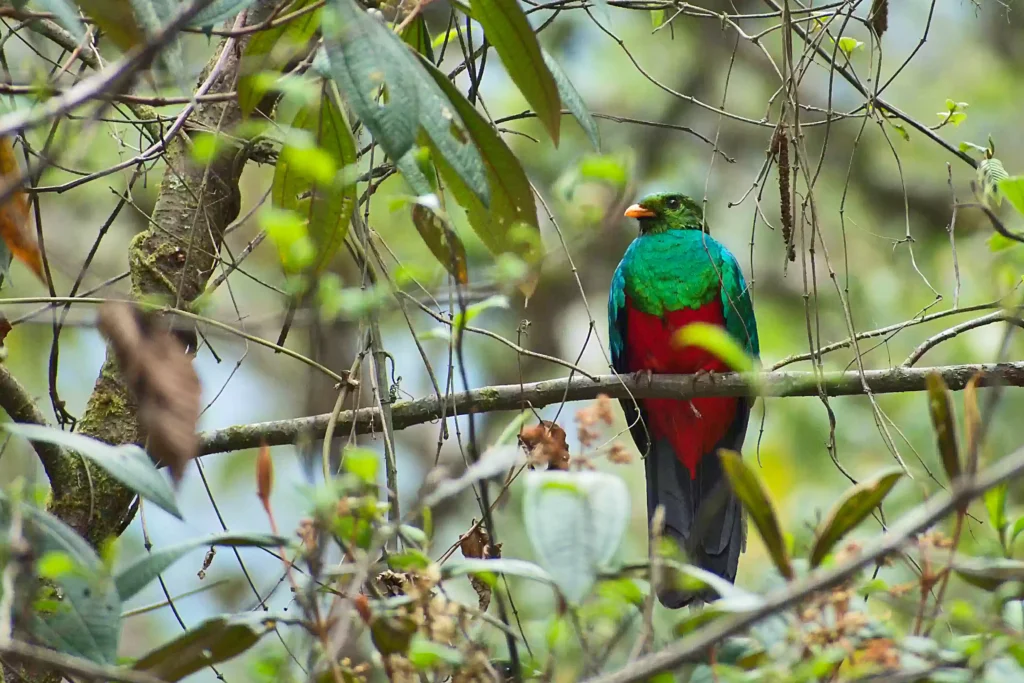
Where to spot them: Upper cloud forest zones along the Inca Trail, particularly in areas with abundant fruiting trees. The Mandor Valley upper sections and forested areas around Wiñay Wayna offer good opportunities.
Best viewing time: Early morning (6:00-9:00 AM) when they’re most active. Look for fruiting trees, especially wild avocados.
10. Gray-breasted Mountain-Toucan (Andigena hypoglauca)
High-Altitude Specialist Among Birds of Machu Picchu
The Gray-breasted Mountain-Toucan represents one of the most distinctive bird of Machu Picchu, adapted to life in cooler montane forests. Unlike their lowland toucan relatives, mountain-toucans thrive at elevations up to 3,500 meters with specialized adaptations for high-altitude living.
This striking species features a massive, colorful bill marked with red, yellow, and black patterns—a spectacular sight against their blue-gray breast and golden-olive upperparts. Their distinctive bill serves multiple purposes: reaching fruit on outer branches, thermoregulation, and social signaling during breeding displays.
Mountain-toucans are highly social birds, often traveling in small flocks of 5-12 individuals. They’re surprisingly acrobatic for their size, hopping along branches and even hanging upside-down to reach fruit. Their diet consists primarily of fruits, but they’ll opportunistically consume insects, small lizards, and occasionally raid other birds’ nests for eggs.
These charismatic birds produce a variety of vocalizations including croaking calls, yelps, and rattling sounds that echo through mountain forests. Their presence often announces itself audibly before visual confirmation.
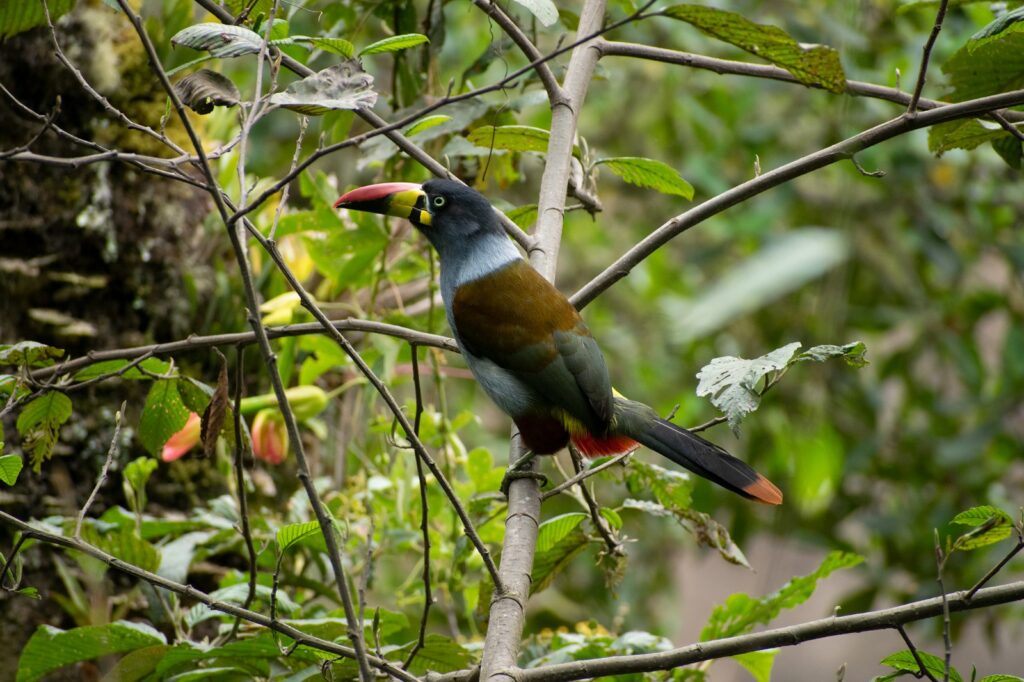
Conservation status: Near Threatened due to habitat loss and fragmentation in montane forests.
Where to spot them: Higher elevation forests around Machu Picchu, particularly along the upper Inca Trail sections and in protected forest patches near treeline. They favor areas with abundant fruiting trees like Podocarpus and native cherries.
Best viewing time: Mid-morning (7:00-10:00 AM) when flocks are actively feeding. Unlike many birds of Machu Picchu, mountain-toucans remain fairly active throughout the day.
Identification tip: Their croaking calls often reveal their presence before you see them. Look for movement in the canopy of fruiting trees, and watch for their characteristic undulating flight between forest patches.
Best Times and Places to See Birds of Machu Picchu
Optimal Seasons for Birding
Dry Season (May-October): Best overall visibility and trail conditions. Many birds of Machu Picchu are most active during morning hours.
Wet Season (November-April): Increased bird activity with breeding displays, though trails can be muddy and mist may obscure views.
Top Birdwatching Locations
- Mandor Valley and Waterfall Trail – Excellent for Cock-of-the-Rock, Green Jays, and forest species
- Urubamba River corridor – Best for Torrent Ducks and streamside species
- Machu Picchu ruins gardens – Hummingbirds and open-country species
- Inca Trail – Diverse elevational gradient with varied habitats
- Aguas Calientes surroundings – Accessible spots for casual birdwatchers
Complete Your Birds of Machu Picchu Checklist
Beyond these 10 spectacular species, the Machu Picchu Sanctuary hosts hundreds more. Other notable species include:
- White-capped Dipper (Cinclus leucocephalus) – stream specialist
- Chestnut-breasted Coronet (Boissonneaua matthewsii) – stunning hummingbird
- Andean Guan (Penelope montagnii) – large forest bird
Plan Your Birdwatching Adventure to See Birds of Machu Picchu
Ready to experience the incredible birds of Machu Picchu for yourself? Whether you’re targeting specific endemic species or simply want to enjoy the region’s natural beauty, proper planning ensures the best experience.
Why Choose Neotropic Peru Travel?
- Expert local birding guides who know the behavior and locations of birds of Machu Picchu
- Specialized birdwatching itineraries designed for optimal wildlife viewing
- Small group sizes that don’t disturb sensitive species
- Flexible schedules that maximize early morning birding opportunities
- Photography-focused tours for serious bird photographers
Start Your Birds of Machu Picchu Journey Today
Contact Neotropic Peru Travel today to design your perfect birdwatching adventure. Our expert team will help you plan every detail, from optimal travel dates to specialized equipment recommendations.
👉 Contact us now to start planning your adventure!
Let us share our passion for these incredible birds with you. Your journey into one of the world’s premier birding destinations awaits!